
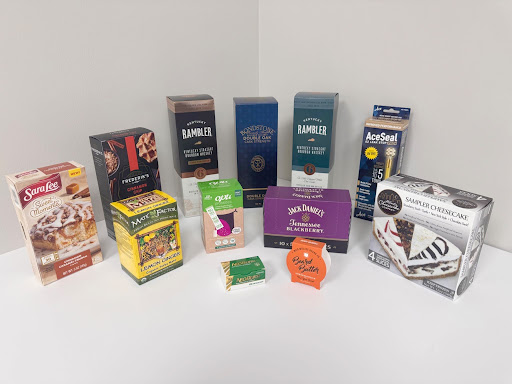
When buyers compare folding carton quotes, the price per carton often gets most of the attention. But that number is the result of many interconnected decisions, and two cartons that look similar on a shelf may have very different production requirements.
Understanding what drives folding carton cost can help you request more accurate quotes, compare suppliers fairly, and identify opportunities to reduce total packaging expense without compromising performance or shelf appeal.
There is no single formula that applies to every carton. However, most pricing is shaped by the following factors.
Carton Size and Board Utilization
The dimensions of a carton affect much more than the amount of paperboard used. They also determine how many carton blanks can be arranged on a press sheet or across a roll of material. This layout is often called the imposition or yield.
Even a small change in a panel, flap, or tuck can sometimes allow more cartons to fit within the available sheet or web. That can reduce material waste and improve production efficiency. In other cases, a slightly larger carton may cross a threshold that reduces the number of cartons produced from each sheet.
This is one reason it is valuable to involve a structural packaging designer early. The team can evaluate not only whether the carton protects and presents the product, but also whether the structure uses material efficiently and runs well through production.
Paperboard Type and Thickness
Paperboard is a significant component of folding carton pricing, but selecting a substrate is not simply a matter of choosing the least expensive option. The right board must support the product’s weight, environment, printing requirements, and performance needs.
Variables may include:
- Board grade and fiber composition
- Caliper, or board thickness
- Coated versus uncoated surfaces
- Recycled-content or responsibly sourced material requirements
- Moisture, heat or grease resistance
- Direct-food-contact requirements
- Metallic, poly-coated or other specialty substrates
Specifying more board than the application requires can add unnecessary cost. Choosing too little can lead to bowing, tearing, poor stacking or failure on the packing line. The objective is to match the material to the actual application rather than defaulting to a familiar specification.
Order Quantity and Production Volume
Folding carton manufacturing includes setup work that occurs before the first saleable carton is produced. Depending on the process, that may include preparing plates, inks, dies, coatings, press settings and finishing equipment. Those costs are distributed across the total order.
Paperboard purchasing requirements can also affect pricing. Certain board grades, calipers or specialty substrates may have minimum purchase quantities. This means more material may need to be purchased than a smaller carton order will use, which can influence the economics of the job.
As volume increases, setup and material costs are generally spread over more cartons, lowering the unit price. But ordering the largest possible quantity is not always the most economical decision. Excess cartons require storage and may become obsolete when ingredients, regulations, promotions or brand graphics change.
The better question is not simply, “How do we get the lowest unit price?” It is, “What order quantity and production approach gives us the best total cost while protecting cash flow and limiting excess or obsolete inventory?”
Number of SKUs and Artwork Versions
A product family may use one carton structure across several flavors, sizes or formulations. That creates efficiencies, but each artwork version still needs to be prepared, approved and managed correctly. Frequent changeovers can also affect production efficiency.
Brands with a growing SKU portfolio should share annual volume by SKU, expected order frequency and launch plans with their carton manufacturer. That information helps the production team evaluate whether jobs can be coordinated, whether a shorter-run method makes sense and when a successful SKU may be ready to move to a different production platform.
Printing Process and Color Requirements
Digital, offset, and flexographic printing each have different setup requirements, production strengths, and economic sweet spots. The best choice depends on run length, graphics, substrate, color expectations, turnaround needs, and the number of versions being produced.
Color decisions also matter. A design using process color may have different requirements than one with multiple custom spot colors. Tight brand-color tolerances, specialty inks, inside printing or printing on both sides of the board can add production steps. None of these choices is inherently excessive; the key is determining which details genuinely support the brand and product.
Coatings and Finishing
Finishing can improve appearance, protect the printed surface or add required performance. Options such as foil stamping, embossing, debossing, windowing, specialty coatings and soft-touch effects can make a carton more distinctive, but they may also require additional materials, tooling or production passes.
For food and beverage cartons, a coating may serve a functional purpose by helping the package resist grease, moisture, or heat. In retail applications, it may protect graphics from scuffing or create contrast between gloss and matte areas. Buyers should evaluate finishing based on the job it needs to do, not only how it looks in a sample.
Tooling and Structural Development
A new carton typically requires a cutting die, and specialty features may require additional tooling. These are usually one-time or infrequent costs rather than a recurring cost on every order. If an existing structure and tooling can be reused, the initial investment may be lower.
However, forcing a new product into an existing structure is not always the right decision. A well-engineered carton can improve product protection, packing efficiency, board usage and the customer experience. The value of structural development should be considered across the full life of the packaging program.
Packing, Inventory and Delivery Requirements
The quoted carton price may not tell the entire story. Cartons can be packed in different quantities and configurations, placed into master cases, palletized, stored and delivered according to a customer’s schedule. Inventory-management programs and staged releases may help customers use space and working capital more efficiently, but those services also need to be included in the overall program design.
Freight can also materially affect total delivered cost. Cartons are typically shipped flat, but carton dimensions, case packs, pallet patterns and delivery distance still influence transportation efficiency. Domestic and regional production can provide advantages when responsiveness, communication and predictable replenishment are priorities.
What Can Unexpectedly Increase Folding Carton Cost
Some of the most expensive packaging problems begin outside the manufacturing process. Common examples include:
- Completing artwork before the carton structure is finalized
- Requesting a quote without accurate annual volume or SKU information
- Changing copy, colors or finishes after approvals have begun
- Selecting a material before defining the package’s performance environment
- Ordering too much packaging to reach a lower unit price
- Failing to test the carton with the product or on the packing line
- Treating freight, storage and obsolete inventory as separate from packaging cost
How to Receive a More Useful Folding Carton Quote
A carton manufacturer can provide a more accurate recommendation when the request includes:
- Finished carton dimensions or a product sample
- Quantity per order and estimated annual volume
- Number of SKUs or artwork versions
- Current board specification, if one exists
- Product weight and packing method
- Storage, refrigeration, heat, moisture or grease exposure
- Printing, coating and finishing expectations
- Food-contact, retailer or regulatory requirements
- Requested delivery date and delivery location
If some of these details are still unknown, that is not necessarily a problem. It may simply mean the project should begin with a conversation and structural review rather than a price request alone.
The Goal is the Right Total Cost
The least expensive carton on a quote is not always the lowest-cost packaging solution. A carton that uses material efficiently, runs reliably, arrives when it is needed and avoids excess inventory can create savings well beyond its unit price.
At Pak-Pro, we work with customers to understand the complete application before recommending a structure, substrate or production method. With in-house design support, broad printing and finishing capabilities, and more than 70 years of folding-carton experience, we help brands make packaging decisions that support both performance and growth.
Planning a new carton or evaluating an existing program? Connect with the Pak-Pro team to discuss your product, volume and packaging goals.